---
{
title: "What are React Server Components (RSCs)?",
description: "React Server Components have been a topic of regular discussion in the WebDev space as-of late. What are they? How do they improve the SSR story for React? Let's take a look.",
published: '2023-12-16T21:52:59.284Z',
edited: '2023-12-17T21:52:59.284Z',
authors: ['crutchcorn'],
tags: ['react', 'webdev', 'javascript'],
attached: [],
license: 'cc-by-4',
collection: "react-beyond-the-render",
order: 4
}
---
[In our last article in the series, we talked about how React is able to pre-generate HTML from JSX on the server (or developer's machine) prior to being shipped to the end-user](/posts/what-is-ssr-and-ssg). This process is called "SSR" and can be mission-critical in getting your applications as performant as possible.
I originally wrote that article in early 2020. At this point in React's development lifecycle, there was an inherent problem to using SSR; it would lead to duplicate effort between the server and the client.
See, up to that point Next.js and other React SSR solutions had one way of doings things:
1) Render [the VDOM](/posts/what-is-reconciliation-and-the-vdom) on the server
2) Generate HTML from the server's VDOM
3) Ship HTML and all of the React code to the client
4) Re-generate the VDOM from scratch on the client
5) Wipe away the old DOM and re-render all components from the new client's VDOM instance

This process is called "Hydration" and while it _worked_ the way it did before, it introduced a new performance problem. Hydration could be needlessly expensive if most of your content coming from the server was going to be static anyway. This was a huge problem that the React team had to solve.
Later in the same year of my article (December 2020), they had the answer: [React Server Components](https://legacy.reactjs.org/blog/2020/12/21/data-fetching-with-react-server-components.html).
# What is a React Server Component (RSC)?
In short; React Server components allow you to designate which React components render on the server and which components re-initialize on the client. This is done using a special syntax in your components and allows for special server-only data loading patterns when implemented properly.
For example, take the following:
```jsx
function App() {
return <>
{/* Render parts on the client */}
{/* Render all of it on the client */}
{/* Render all of it on the server */}
}
```
When executed, it might look something like the following process:
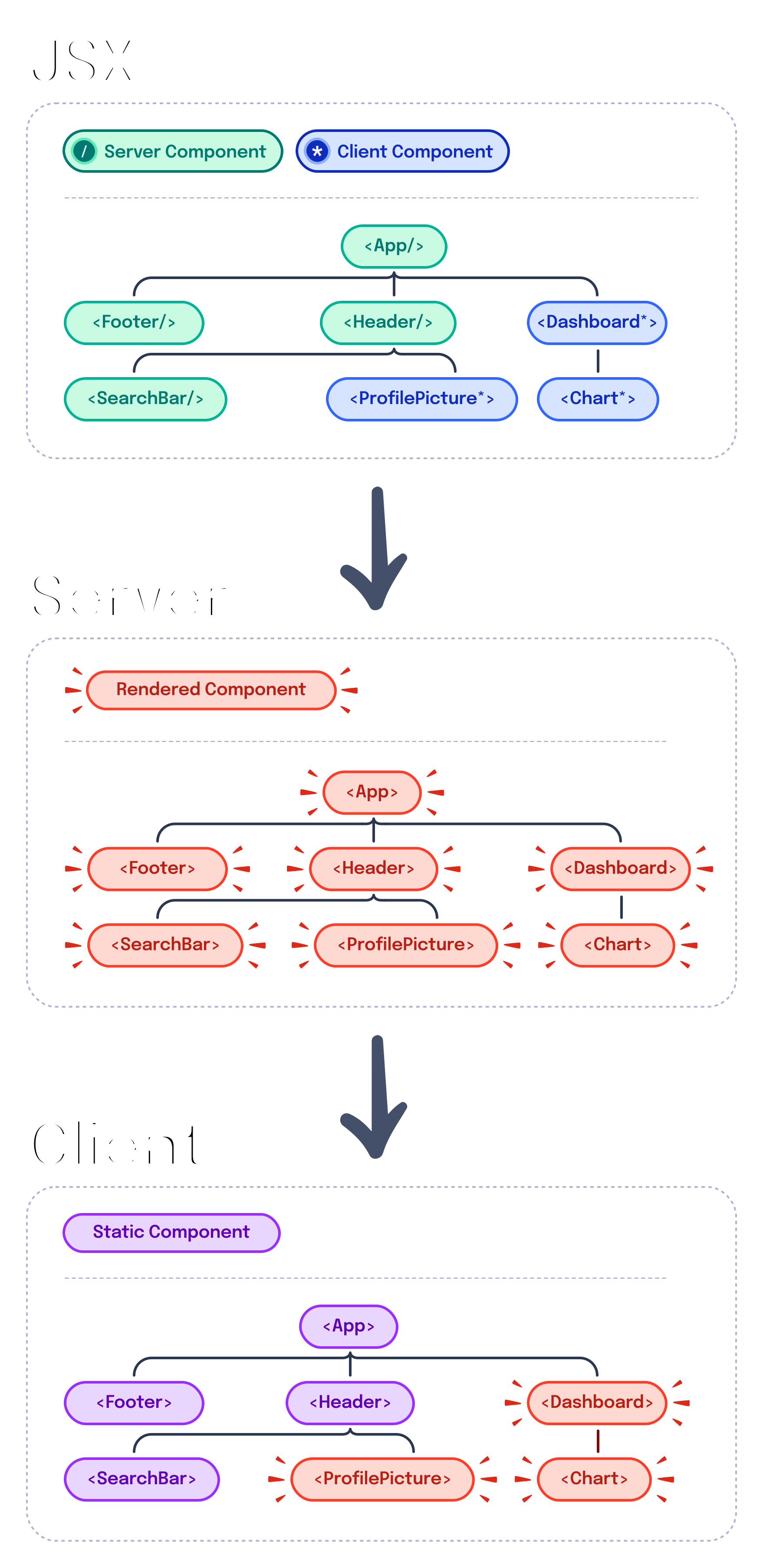
Here, we can see that ``, ``, and all of their children will be re-initialized on the client. Meanwhile the `